Featured Exhibits
The term “North Berrien” refers to the northern section of Berrien County, Michigan. This includes the townships of Bainbridge, Coloma, Hagar, and Watervliet, as well as the cities of Coloma and Watervliet, and the towns of Millburg, Riverside, and Lake Michigan Beach. Paw Paw Lake, southwest Michigan’s largest inland lake, is also located in North Berrien.
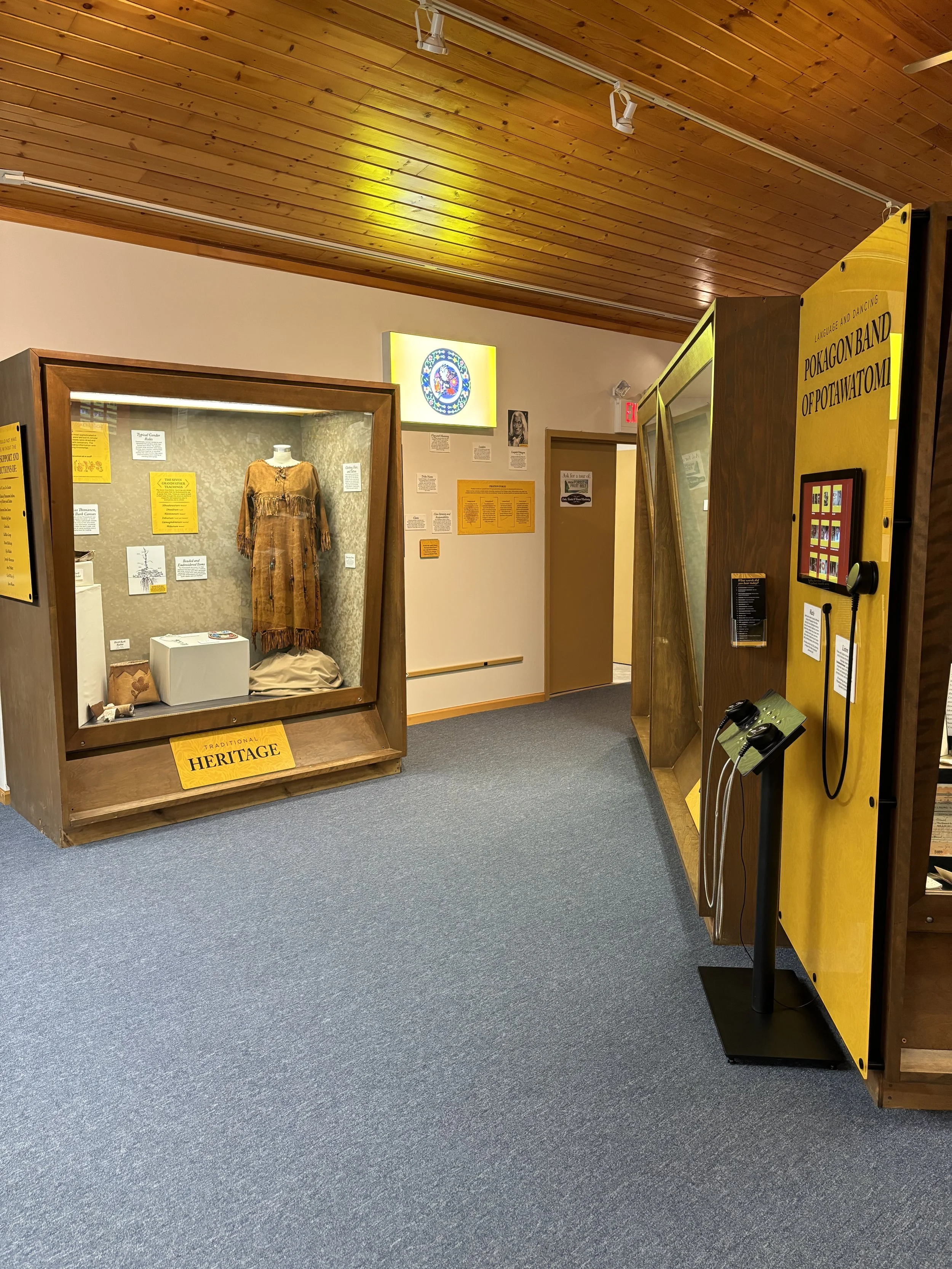
Pokagon Band of Potawatomi exhibit
Opened Fall 2025, this interactive exhibit was co-curated by Dr. John N. Low, retired Professor Emeritus from the Ohio State University, award-winning author, and enrolled citizen of the Pokagon Band of Potawatomi Indians. Through multimedia and hands-on components, guests can engage directly with the material. The exhibit covers three main topics: Traditional Heritage, European Contact, and Modern Pokagon Culture.
For additional information, please call
(269) 468-3330.

Main Gallery
Featuring a variety of topics, the Main Gallery covers over 200 years of local history! Topics currently include:
Native American & Potawatomi
Early North Berrien Settlers
History of Laundry in America
Early Photography
Paw Paw Lake & Resort History
Watervliet Paper Mill & Local Industries
from forest to fruit belt
The permanent exhibition “From Forest to Fruit Belt” will convey how both lumbering and agriculture were closely related to transportation developments in the history of Southwest Michigan. By explicitly linking these topics, visitors will gain an understanding and appreciation for how the local environment has been shaped over time.
The Lumber Years
Pioneering Farmers
The Fruit Belt Blossoms


SW Michigan Crate, Basket, & Veneer Machinery Collection
Michigan has had a stable agricultural economy for over a century. In more recent years, it has accounted for about 22% of the state’s employment and grossed $101.2 billion annually, according to the Department of Agriculture & Rural Development. These impressive numbers did not come overnight. Many industries contributed to making Michigan into the agricultural state it is today.